Country/Region/City
Each FISU World University Championship is more than just a sporting event — it’s a unique opportunity to discover a new culture, explore a region, and connect with a vibrant academic community.
This page introduces you to the host country and city for this edition, highlighting their history, key features, and commitment to sport and youth.
Poland
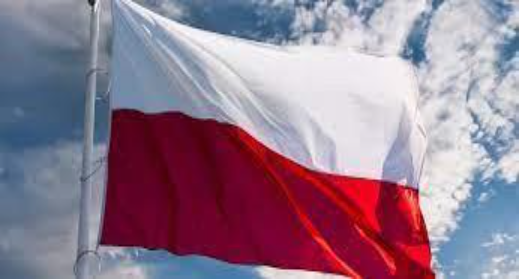
Located in the heart of Europe, Poland is a country rich in history, tradition, and natural diversity. Known for its welcoming atmosphere and well-developed infrastructure, Poland is an ideal destination for international gatherings and events, providing a unique mix of historical significance and modern convenience.
Poland’s landscapes are diverse and breathtaking. From the sandy beaches of the Baltic coast to the picturesque Tatra Mountains and the tranquil Mazurian Lakes, there’s no shortage of natural beauty to explore. National parks, forests and countryside offer opportunities for outdoor enthusiasts and nature lovers to immerse themselves in Poland’s pristine wilderness.
Poland is a modern and dynamic society, with bustling cities like Warsaw, Krakow, and Wroclaw serving as hubs of innovation, commerce, and culture. The country has undergone rapid economic development since the fall of communism, with a thriving tech sector, vibrant startup scene, and growing international presence.
The country has a proud sporting tradition, hosting numerous international events and nurturing a strong sense of community through sports and cultural initiatives. With a history that spans over a thousand years, Poland boasts UNESCO World Heritage sites, medieval castles, and vibrant cultural festivals.
Officially the Republic of Poland is a country in Central Europe. It is divided into 16 administrative voivodeship provinces, covering an area of 312,696 km2 (120,733 sq mi). Poland has a population of over 38 million and is the fifth most populous member state of the European Union. Warsaw is the nation’s capital and largest metropolis.
As a member of the European Union and NATO, Poland plays a vital role in shaping the future of Europe. The country is an important political and economic player on the European stage, contributing to regional stability, cooperation, and integration.
General Information about Poland:
- Capital: Warsaw (Warszawa)
- Language: Polish
- Currency: Polish Złoty (PLN)
- Population: Around 38 million people
- Time Zone: Central European Time (CET) during winter (GMT+1), and Central European Summer Time (CEST) during summer (GMT+2).
- Government: A democratic republic with a president as the head of state and a prime minister as the head of government.
- EU Member: Poland joined the European Union in 2004
- Emergency number: 112
Warsaw
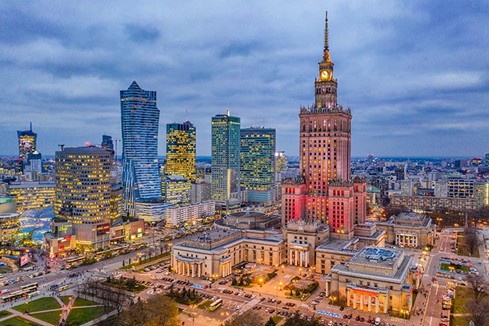
The metropolis stands on the River Vistula in east-central Poland. Its population is officially estimated at 1.86 million residents within a greater metropolitan area of 3.1 million residents, which makes Warsaw the 7th most-populous city in the European Union. The city area measures 517 km2 (200 sq mi) and comprises 18 districts, while the metropolitan area covers 6,100 km2 (2,355 sq mi). Warsaw is an alpha global city, serving as a major cultural, political, and economic hub, and the country’s seat of government. It is also the capital of the Masovian Voivodeship.
Nestled along the banks of the Vistula River, Warsaw seamlessly blends its storied past with contemporary developments. The cityscape is a juxtaposition of historic architecture, reconstructed landmarks, and sleek skyscrapers, showcasing its resilience and ability to adapt over the centuries.
One of Warsaw’s most striking features is its meticulously reconstructed Old Town, a UNESCO World Heritage Site. After being heavily damaged during World War II, the Old Town was painstakingly rebuilt to its former glory, complete with charming cobblestone streets, colorful buildings, and picturesque squares. St. John’s Archcathedral and the Royal Castle are among the architectural gems that anchor this historic district.
Beyond the Old Town, Warsaw boasts a thriving cultural scene. Renowned museums like the Warsaw Uprising Museum and the POLIN Museum of the History of Polish Jews provide insights into the city’s tumultuous past. Meanwhile, art galleries, theaters, and music venues contribute to a lively cultural landscape.
Warsaw is also a city of green spaces, with numerous parks and gardens offering respite from urban bustle. Łazienki Park, with its tranquil lakes and neoclassical palace, is a favorite spot for locals and visitors alike to unwind and enjoy nature.
In recent years, Warsaw has emerged as a dynamic economic hub, attracting businesses, startups, and entrepreneurs from around the world. Its modern skyline is dominated by sleek office towers and luxury apartments, symbolizing the city’s forward-looking spirit. But amid the modernization, Warsaw hasn’t forgotten its roots. Traditional Polish cuisine thrives in the city’s restaurants and cafes, offering hearty dishes like pierogi (dumplings), żurek (sour rye soup), and bigos (hunter’s stew). And throughout the year, festivals, concerts, and cultural events celebrate Warsaw’s heritage and diversity.
Overall, Warsaw is a city of contrasts, where history meets innovation, and old traditions mingle with contemporary trends. Whether exploring its historic streets or embracing its modern amenities, visitors to Warsaw are sure to be captivated by its dynamic energy and enduring charm.
Akademicki Zwiazek Sportowy
Akademicki Zwiazek Sportowy Warszawa (AZS Warszawa) – University Sport Association in Warsaw was established in 1916. It has a long and dynamic history. In the interwar period between 1919 – 1939 AZS Warszawa was the biggest sport club in Poland, bringing together over 2500 students. Besides the developing of grassroots sports, it had enormous success in professional sport as well – with Halina Konopacka, who represented the club in discus throw through her whole career and was also the first Polish athlete to become Olympic Champion. The strong structure of the club helped survived all the difficult times and right now, AZS Warszawa has around 6000 members.
From the very beginning the club was devoted to university sport and it main goals were concerning the support for athletes-students, as well as general development of sport at higher education institutions. Over the time since the establishment of the association a lot of things changed, but those goals stayed the same and are the fundament of functioning of the club. As the essential document of the association – Statue states, the main goals of the organization are among others: promotion of physical activity among students, supporting the education of members according to the universal values, actions supporting sport for people with disabilities, actions against social pathologies, creating sport opportunities for youth from disadvantages, support activities for European integration and actions for development of volunteer activities.
The club is a non-government organization focused on academic sport but also working on wider area and supporting the sport for people in all ages. The main fundament of the club is organizing sport events for university athletes in Warsaw. Right now, the tournaments are held in more than 30 disciplines. The associations is also involved in organizing national university championships, sport festivals and other special sport events.
A vital part of work being done in AZS Warszawa is Varsoviada – sport tournaments held every year for first-year students. It has begun in 1964, which means they have been held already for over 50 years. Every year over 1000 first-year students take part in the competition. The final weekend of the tournament is a celebration of sport, university and educational values and stands as a great support for young people only just starting their academic journey. AZS Warszawa also organizes series of tournaments for all students in Warsaw, as well as final competitions on national level.
An example of other special sport events is Cooper’s test for all – event that encourages all people to test themselves in a try-out depending on fastest run in twelve minutes. It is an initiative started in 2011 and its goal to encourage people to try out physical activity – no matter the age, physical conditions or other qualifications.
Having an extensive experience in organizing sport and educational events, AZS Warszawa is also a valuable partner for those occasions. Since 2018, the club is involved in organizing events for European Week of Sports in Warsaw. Due to the strong formal structure, every year the club in involved in many sport events, overall promoting physical activity and its values not only among students, but among all.